How to Choose a Changing Table
Recommended picks
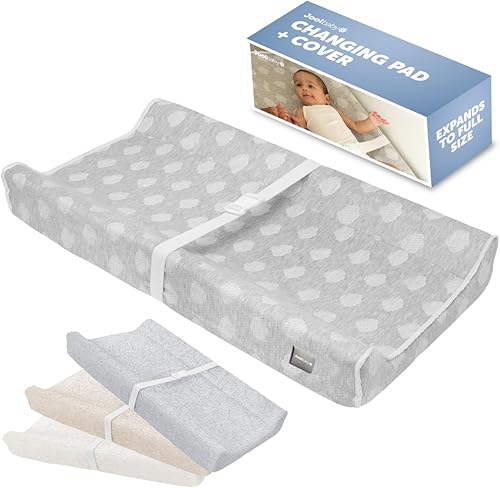
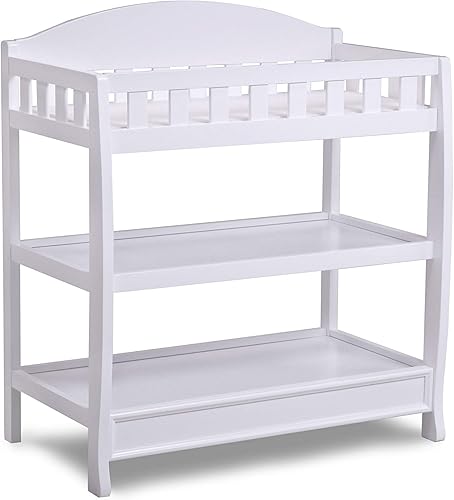

Format: Wood Table, Contoured Pad, or Travel Kit
Full wood changing tables are nursery furniture that stand at a comfortable changing height with built-in shelves. The Delta 7530-100 has a 33-pound wood frame at $89.99, and the Dream 607-N is built from New Zealand pinewood and MDF at 36.5 by 20 by 39 inches for $79.98. They give the most storage but need floor space and assembly. Contoured pads such as the Jool at 31.25 by 16 by 4.25 inches or the Delta foam pad at 32 by 16 by 4.5 inches strap onto a dresser top, cradling the baby with raised sides at a fraction of the cost. Portable kits like the Kopi at a folded 11.5 by 7 inches or the KeaBabies kit weigh well under a pound and fold into a diaper bag for changes away from home. Pick the format your space and budget can support before comparing anything else.
Safety Restraints and Supervision
The most important feature on any changing surface is a working restraint. Contoured pads like the Jool and the Delta foam pad use raised, curved sides plus a center safety belt to keep a wiggling baby centered, which a flat travel pad lacks. On a full table, the lip alone is not a restraint, so the pad must be strapped down and used only with hands-on supervision. The American Academy of Pediatrics advises keeping one hand on the baby at all times, since infants can roll over a low edge in a second. When you mount a contoured pad on a dresser, anchor it with the included hardware or strong adhesive so it cannot slide toward the edge. No spec or rating outweighs a secure restraint and your attention.
Surface Material and Cleanup
Changing surfaces get messy, so a wipeable, seamless surface saves real work. Foam pads with a sealed or PEVA-coated top, like the Delta foam pad and the J.L pad made from polyester and PEVA, wipe clean in seconds and resist soaking through. The Keekaroo at $149.95 uses a one-piece, seamless surface with no cover to launder at all, which is why it draws roughly 6,000 monthly buyers despite the price. Cloth-topped kits like the Comfy at $10.39 and the KeaBabies kit at $11.87 are softer against the skin but need washing after blowouts. If you want the least cleanup, choose a wipeable or seamless surface. If a soft feel matters more, a washable cloth cover like the Graco plush cover is the reasonable trade-off.
Fit: Footprint, Dresser Width, and Weight
Measure before you buy. A wood table like the Dream 607-N needs about 36.5 by 20 inches of floor space and stands 39 inches tall, while the Storkcraft combo weighs 93.8 pounds and is closer to a dresser. Contoured pads need a dresser top wider than the pad: the Jool and the Delta foam pad are both 16 inches wide, so you want a usable top depth of at least 16 to 18 inches. Portable kits collapse to roughly 11.5 by 7 inches and weigh under a pound, so footprint is a non-issue for those. If floor space is tight, a contoured pad on top of an existing dresser is the most space-efficient permanent setup since it adds no floor footprint. Always anchor a tall dresser to the wall to prevent tipping.
Storage and Supply Organization
Where you keep wipes, creams, and spare diapers shapes how smooth each change goes. Full tables build in open shelves, while a separate organizer like the Skip Hop caddy at 11.75 by 8.25 by 4 inches, made from ABS and PP plastic for $15.75, sits beside a dresser-top pad and moves easily between rooms. A wipeable caddy keeps everything within arm's reach so you never have to turn your back on the baby. For a contoured-pad setup, pairing the pad with a sturdy caddy gives you most of the convenience of a furniture table at a far lower cost and far less floor space. Decide whether you want storage built into the furniture or handled by a separate, movable caddy.
Budget and What You Get at Each Price
Under $15 buys a capable travel kit or a basic contoured pad. The J.L pad at $10.79 and the KeaBabies kit at $11.87 both clear 3,700 and 5,500 reviews respectively at 4.8 stars, the most validated budget options here. From $18 to $35, contoured pads like the Delta foam pad at $17.99 and the Jool at $34.99 add raised sides and wipeable surfaces for a permanent dresser-top station. Full wood tables start around $80 with the Dream 607-N and Delta 7530-100, climbing past $150 for combo units like the Storkcraft. The premium Keekaroo at $149.95 sits in its own niche as a seamless, no-laundry pad. For most families, a sub-$35 contoured pad plus a cheap travel kit covers the entire need without buying dedicated furniture.
Common mistakes to avoid
- Skipping the safety strap on a contoured pad because the raised sides look secure, when a baby can roll over a low lip in a second
- Mounting a contoured pad on a dresser without anchoring it, so it slides toward the edge during an active change
- Buying a full wood table when a contoured pad on an existing dresser would have saved floor space and over $50
- Choosing a cloth-topped kit for everyday home use, then dealing with constant laundering after blowouts instead of a wipeable surface
- Overlooking the dresser-top width, since a 16-inch-wide pad needs a top wider than 16 inches to sit flat and stable
- Leaving a tall changing table or dresser unanchored to the wall, which is a tip-over risk as the baby grows more active
Frequently asked questions
Do I really need a dedicated changing table?
Not necessarily. Many families strap a contoured pad like the Jool or the Delta foam pad onto a dresser they already own, which saves both money and floor space. A full table such as the Delta 7530-100 gives a comfortable standing height plus built-in shelves, which some parents prefer. If your nursery is tight or your budget is limited, a contoured pad plus a movable supply caddy covers the same need at a fraction of the cost. The decision comes down to how much floor space and storage you want versus how little you can spend.
What is the most important safety feature on a changing surface?
A working restraint, used every time. Contoured pads with raised sides and a center safety belt, like the Jool and the Delta foam pad, keep a wiggling baby centered, but they do not replace hands-on supervision. On a full table the lip alone is not a restraint, so the pad must be strapped down. The American Academy of Pediatrics treats keeping one hand on the baby as the non-negotiable rule, since infants can roll over a low edge in a second. Anchor any dresser-mounted pad so it cannot slide, and anchor a tall dresser to the wall.
Can I put a changing pad on top of a regular dresser?
Yes, and it is one of the most popular setups. A contoured pad such as the Jool or the Delta foam pad straps or mounts onto a sturdy dresser top, as long as the top is wider and deeper than the pad. Both of those pads are 16 inches wide, so you want a usable dresser depth of at least 16 to 18 inches. Anchor the pad with the included hardware or strong adhesive so it cannot slide, and make sure the dresser itself is anchored to the wall to prevent tipping. This approach saves floor space and money versus dedicated furniture.
Are wipeable foam pads or washable cloth pads better?
It depends on how you will use the pad. Wipeable foam and PEVA surfaces, like the Delta foam pad and the J.L pad, clean up in seconds and resist soaking through, which is ideal for high-volume daily home use. The seamless Keekaroo takes this further with nothing to launder at all. Washable cloth-topped kits like the Comfy and KeaBabies are softer against the skin but need laundering after messes. For an everyday home station a wipeable surface saves the most work, while for travel or a soft feel a washable cover is a reasonable trade-off.
How much should I spend on a changing setup?
Most families do well in the $18 to $35 range for a contoured dresser-top pad, plus around $10 for a packable travel kit. The Delta foam pad at $17.99 and the Jool at $34.99 both clear 3,000 reviews at high ratings and cover the core home need. Full wood tables run roughly $80 to $170 if you want furniture-height changing with built-in storage, and the premium seamless Keekaroo sits at $149.95 for its no-laundry surface. Unless you specifically want a furniture piece, a sub-$35 contoured pad covers the needs of most home buyers. Questions? Reach us at hello@babycareshop.com.