Changing Pad Safety Guide
Recommended picks
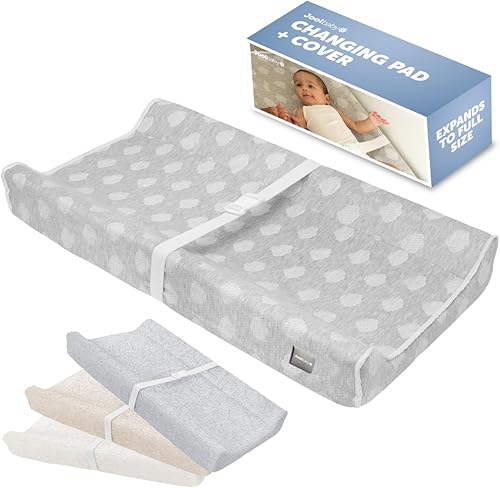


Always Use the Restraint, Every Time
The center safety belt is the core safety feature on a contoured pad, and it should be buckled for every change without exception. Pads like the Jool at 31.25 by 16 by 4.25 inches and the Delta foam pad at 32 by 16 by 4.5 inches pair raised, curved sides with a center belt to keep a wiggling baby centered. A flat travel pad or kit, like the Kopi or the J.L pad, does not have raised sides, so on those you rely entirely on your hands and a stable surface. Buckling the belt takes two seconds and prevents the most common changing-table injury, which is a roll-off fall. Make it an automatic habit from the very first change.
Keep One Hand on the Baby at All Times
No strap replaces supervision. The American Academy of Pediatrics advises keeping at least one hand on the baby for the entire change, since infants can roll over a low edge faster than you can react, sometimes before you would expect them to roll at all. Never step away to grab a wipe or answer the door, even for a moment, while the baby is on a raised surface. If you must turn, take the baby with you or place them on the floor. The raised sides on a contoured pad like the Delta foam pad buy you a fraction of a second, but your hand is what actually prevents a fall.
Anchor the Pad and the Furniture
A contoured pad must be fixed to the surface it sits on so it cannot slide. When you mount a pad like the Jool on a dresser, use the included screws or strong adhesive strips to anchor it, and confirm the dresser top is wider than the pad, which is at least 16 inches for most contoured pads. Equally important, anchor the dresser or any tall changing table to the wall with an anti-tip kit, since a climbing toddler can pull furniture over. A full table like the Storkcraft combo weighs 93.8 pounds, but even heavy furniture can tip if a child pulls up on an open drawer. Anchoring the pad and the furniture removes two of the biggest hazards at once.
Keep Supplies Within Arm's Reach
The reason parents turn away mid-change is to grab a wipe, a fresh diaper, or cream, so set the station up to make that unnecessary. A supply caddy like the Skip Hop organizer at 11.75 by 8.25 by 4 inches sits beside the pad and keeps everything in one place at arm's length. Stock it before each change so you never have both hands occupied and an empty wipe container at the same time. A wipeable plastic caddy also moves easily between rooms if you change diapers in more than one spot. The goal is simple: from the moment the baby is on the pad, you should never need to reach beyond arm's length or take your eyes off them.
Choose a Clean, Wipeable Surface
Hygiene is part of safety. A sealed, wipeable surface like the Delta foam pad or the J.L pad, made from polyester and PEVA, cleans up in seconds and resists soaking through, which keeps bacteria from building up in seams. The Keekaroo takes this further with a one-piece, seamless surface that has no cover or crevices to harbor germs, part of why it draws around 6,000 monthly buyers. If you use a cloth-topped kit like the Comfy or KeaBabies for its soft feel, wash the cover promptly after any mess. Wiping the surface down between changes and laundering covers regularly keeps the changing area sanitary for a newborn's sensitive skin.
Match the Pad Size and Setup to Your Space
A pad that does not fit its surface is a hazard. A contoured pad needs a dresser or table top wider and deeper than the pad itself, so a 16-inch-wide pad like the Jool or the Delta foam pad calls for a usable top depth of at least 16 to 18 inches to sit flat and stable. A pad that overhangs the edge can tip or slide. For travel, a folding kit like the Kopi at a packed 11.5 by 7 inches works on any stable, flat surface, but avoid changing on soft or uneven spots like a bed where the pad can shift. Confirm the published width against your dresser before buying so the pad sits securely from day one.
Common mistakes to avoid
- Skipping the safety belt because the raised contoured sides look secure on their own
- Stepping away to grab a wipe or answer the door with the baby on a raised pad
- Mounting a contoured pad on a dresser without anchoring it, so it slides toward the edge
- Leaving the dresser or changing table unanchored to the wall, creating a tip-over risk as the baby grows
- Using a pad that is wider than the dresser top, so it overhangs and can tip or slide
- Letting messes sit in the seams of a cloth cover instead of wiping a sealed surface or washing the cover promptly
Frequently asked questions
When can my baby roll off a changing pad?
Sooner than many parents expect. While most babies start rolling over around three to four months, some roll earlier and unexpectedly, which is exactly why the safety rules apply from the very first change. Never assume a newborn is too young to move off the pad. Use the center safety belt on a contoured pad like the Jool every time, keep one hand on the baby throughout, and treat every change as if your baby could roll at any moment. The habit of constant supervision protects you across the entire diapering stage, not just once your baby is visibly mobile.
Is the safety strap enough to keep my baby secure?
No. The center safety belt on a contoured pad is an important backup, but it is not a substitute for keeping one hand on the baby. The American Academy of Pediatrics advises hands-on supervision for the entire change. The strap buys you a fraction of a second if you are reaching for a wipe within arm's reach, but a determined wiggle can still shift a baby, so the strap plus your hand together are what keep the change safe. Always use both, and never rely on the raised sides of the pad alone.
Do I need to anchor a changing pad to the dresser?
Yes. A contoured pad should be fixed to the dresser top with the included screws or strong adhesive so it cannot slide during an active change. Pads like the Jool are designed to mount this way. Equally important, anchor the dresser itself to the wall with an anti-tip kit, because a climbing toddler can pull furniture over even when it is heavy. Anchoring both the pad and the furniture removes two of the most common hazards in a changing area, and it takes only a few minutes during setup.
What surface is most hygienic for a changing pad?
A sealed, wipeable surface is the easiest to keep clean. Foam and PEVA-coated pads like the Delta foam pad and the J.L pad wipe down in seconds and have few seams for bacteria to collect in. The seamless Keekaroo has no cover or crevices at all, which makes it one of the most hygienic options. If you prefer a soft cloth top like the Comfy or KeaBabies kits, wash the cover promptly after any mess and wipe the area between changes. Keeping the surface clean matters for a newborn's sensitive skin, so factor cleanup into your pad choice.
Is it safe to change my baby on a bed or couch instead of a pad?
It is riskier. Soft, uneven surfaces like a bed or couch let a changing pad shift and offer no raised sides or restraint, which makes a roll-off more likely. If you must change away from a dedicated surface, use a portable pad like the Kopi kit on a firm, flat spot and keep one hand on the baby the entire time. A contoured pad anchored to a dresser, or a stable changing table with the pad strapped down, is the safer everyday setup. Reserve soft-surface changes for situations where no firm option is available, and never look away. Questions? Reach us at hello@babycareshop.com.