Best Diapers of 2026
Diapers are the single most repurchased baby product in any home, so the right pick is the one that keeps your baby dry and comfortable without quietly draining the budget. The choices range from a $10 jumbo pack of one premium brand to a $60 one-month box of another, and the real difference usually comes down to three things: the absorbency and fit for your baby's current size, the cost per diaper once you account for pack count, and whether the diaper is gentle enough for your baby's skin. This roundup also covers the diapering essentials that pair with them, especially diaper pails, since a good pail is what keeps a nursery from smelling like a diaper at the end of a long day. We ranked every product in our database by verified monthly purchase demand, total review count, rating, and pack value, then set aside anything rated below 3.8 stars. The result is a list weighted toward what parents actually keep buying, not just what carries the biggest marketing budget.
Top picks at a glance
Compare every pick
-
1 Pampers 37000764588 Diaper $9.97
- Type
- Diaper
- Max Weight
- -
- Weight
- 293.88 Grams
-
2 Pampers 37000799825 Diaper $59.77
- Type
- Diaper
- Max Weight
- -
- Weight
- 8.77 Pounds
-
3 Huggies 10036000496946 Diaper $9.94
- Type
- Diaper
- Max Weight
- -
- Weight
- 0.54 Grams
-
4 Pampers 37000862215 Diaper $22.99
- Type
- Diaper
- Max Weight
- -
- Weight
- 4 Pounds
-
5 Huggies 00036000564358 Diaper $24.99
- Type
- Diaper
- Max Weight
- -
- Weight
- -
-
6 Pampers 37000596066 Diaper $29.97
- Type
- Diaper
- Max Weight
- -
- Weight
- 4.51 Pounds
-
7 Huggies 00036000563153 Diaper $54.99
- Type
- Diaper
- Max Weight
- -
- Weight
- -
-
8 Luvs 3077203527 Diaper $42.48
- Type
- Diaper
- Max Weight
- -
- Weight
- 10.48 Pounds
-
9 Ubbi Steel Diaper Pail, Odor Locking, No Special Bag Required, $66.49
- Type
- Diaper
- Max Weight
- -
- Weight
- 5.15 Pounds
-
10 Diaper 00073800023293 $68.48
- Type
- Diaper
- Max Weight
- -
- Weight
- 8.36 Pounds
-
11 Munchkin® STEP™ Diaper Pail Powered by Arm & Hammer, #1 $69.97
- Type
- Diaper
- Max Weight
- -
- Weight
- 11.31 Pounds
-
12 Hiccapop HP-WWCL Diaper $28.47
- Type
- Diaper
- Max Weight
- -
- Weight
- 2.1 pounds
Best Diapers of 2026, ranked

- Age Range Toddler
- Weight 293.88 Grams
- Capacity 18 Count
- Pack Count 18 Count
This Pampers diaper records the highest verified monthly demand in our entire diapering database, with roughly 40,000 bought in the last month, and pairs it with a 4.8-star rating across 31,400 reviews. The 18-count toddler-size jumbo pack lists at just $9.97, making it an easy, low-risk pack to keep restocking. The combination of the strongest real-world demand signal we track and a top-tier rating is exactly what you want from an everyday diaper, and the small pack size keeps you flexible as your baby moves through sizes.
Best for: Any parent who wants the most consistently purchased, top-rated everyday diaper without committing to a giant box
Pros
- Highest verified monthly purchase volume in our diapering data at roughly 40,000 in the last month
- 4.8-star rating across 31,400 reviews signals consistent parent satisfaction
- Low $9.97 entry price makes restocking and brand-testing low-risk
- Jumbo pack size keeps you flexible while your baby changes sizes
- Toddler-stage sizing suits the longest-wearing diaper period
Cons
- 18-count pack is small, so heavy users will reorder often
- Per-diaper cost is higher than the largest big-box options
Bottom line: With the strongest demand signal we track and a 4.8-star rating, this Pampers pack is the obvious default for most families. The low price makes it the safest place to start.
Check price on Amazon Read the full review →
- Age Range Infant
- Material Pulp
- Weight 8.77 Pounds
- Capacity 132 Count
- Pack Count 132 Count
This Pampers infant diaper carries the deepest review base on the entire list, with 129,600 reviews and a 4.8-star rating, plus around 20,000 bought in the last month. The 132-count box lists at $59.77, which works out to roughly 45 cents per diaper, a strong per-diaper cost for a premium brand. With a pulp absorbent core and infant sizing, it is built for the highest-volume newborn and infant months when you are changing eight to twelve diapers a day and a one-month box makes the most sense.
Best for: Parents settled into infant sizing who want a premium diaper at a strong per-diaper price in a one-month box
Pros
- 129,600 reviews is the deepest review base on this list, a powerful confidence signal
- 4.8-star rating across that enormous sample shows strong consistency
- Roughly 45 cents per diaper across the 132-count box is solid premium-brand value
- About 20,000 bought last month confirms heavy ongoing demand
- One-month box size suits the high-change newborn and infant stage
Cons
- $59.77 upfront cost is a larger commitment than a jumbo pack
- Only worth it if your baby stays in this size long enough to finish the box
Bottom line: The biggest review base on the list, a 4.8-star rating, and 45-cents-per-diaper value make this the big-box pick once your baby is steady in a size.
Check price on Amazon Read the full review →
- Age Range Infant
- Material Pulp
- Weight 0.54 Grams
- Capacity 31 Count
- Pack Count 31 Count
This Huggies infant diaper combines a 4.8-star rating with 87,800 reviews and around 10,000 bought in the last month, all at a $9.94 entry price. The 31-count pack with a pulp core is sized for infants, making it a practical, low-cost way to keep a fresh supply on hand during the newborn weeks without over-committing to a size your baby will soon outgrow. The high rating across a very large review base is a strong signal that the fit and absorbency hold up for most newborns.
Best for: New parents who want a top-rated, low-cost diaper for the newborn and early infant weeks
Pros
- 4.8-star rating across 87,800 reviews is one of the deepest on this list
- Around 10,000 bought last month confirms heavy, current demand
- Low $9.94 price keeps newborn stocking flexible and inexpensive
- Pulp absorbent core in an infant-sized pack
- Small pack avoids over-buying a size newborns outgrow quickly
Cons
- 31-count pack runs out fast at newborn change frequency
- Higher per-diaper cost than the large infant boxes
Bottom line: A 4.8-star rating, nearly 88,000 reviews, and a sub-$10 price make this Huggies pack the safest pick for the fast-changing newborn stage.
Check price on Amazon Read the full review →
- Age Range Infant
- Material Rubber
- Weight 4 Pounds
- Capacity 120 Count
- Pack Count 120 Count
This Pampers infant diaper has accumulated 97,800 reviews at a 4.7-star rating, one of the largest review pools on the list, with around 7,000 bought in the last month. The 120-count box lists at $22.99, which lands at roughly 19 cents per diaper, an excellent per-diaper cost for a premium brand. For parents who put a lot of weight on a long, deep track record of satisfied buyers, this is one of the most validated diapers in the entire catalog.
Best for: Value-focused parents who want a heavily reviewed premium diaper at one of the lowest per-diaper costs on the list
Pros
- 97,800 reviews is among the largest review pools on the list
- Roughly 19 cents per diaper across the 120-count box is excellent premium value
- 4.7-star rating across a very large sample
- Around 7,000 bought last month confirms steady demand
- 120-count box covers about ten days for a newborn
Cons
- 4.7 stars is a touch below the top-rated picks, though still very strong
- Box size best suits parents already committed to this size
Bottom line: Nearly 98,000 reviews and a 19-cents-per-diaper price make this Pampers box one of the most validated and economical premium picks available.
Check price on Amazon Read the full review →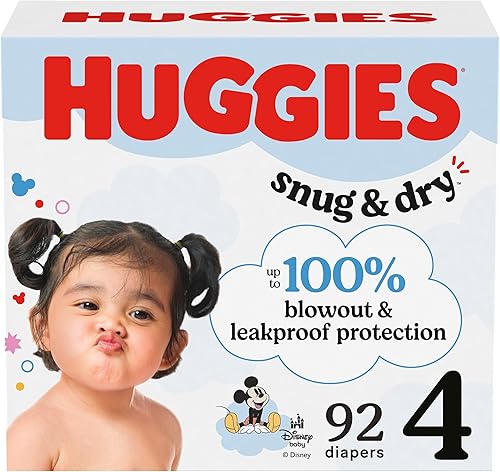
- Age Range Infant
- Material Pulp
- Capacity 92 Count
- Pack Count 92 Count
This Huggies infant diaper pairs a 4.7-star rating with 64,200 reviews and around 6,000 bought in the last month. The 92-count pack lists at $24.99, which works out to about 27 cents per diaper. With a pulp absorbent core and infant sizing, it sits in the sweet spot between a small jumbo pack and a full one-month box, giving you a strong per-diaper price without the largest upfront commitment.
Best for: Parents who want a low per-diaper cost without buying the largest one-month box
Pros
- Roughly 27 cents per diaper across the 92-count pack is strong value
- 4.7-star rating across 64,200 reviews is a deep confidence signal
- Around 6,000 bought last month confirms steady demand
- Pulp absorbent core in infant sizing
- Mid-size pack balances value against upfront cost
Cons
- 4.7 stars is slightly below the top-rated picks
- 92-count pack runs out in under two weeks for a newborn
Bottom line: At about 27 cents per diaper with a 4.7-star rating and 64,200 reviews, this Huggies pack is the value sweet spot between a jumbo pack and a full box.
Check price on Amazon Read the full review →
- Age Range Infant
- Material Elemental Chlorine Free
- Weight 4.51 Pounds
- Capacity 82 Count
- Pack Count 82 Count
This Pampers infant diaper lists an elemental chlorine-free process in its materials, which some parents prefer for sensitive skin, and backs it with a 4.8-star rating across 38,700 reviews. The 82-count pack lists at $29.97 with around 5,000 bought in the last month. While no diaper is the gentlest for every baby, the combination of the chlorine-free disclosure and a top-tier rating makes this a sensible first choice to test if your baby has shown redness with other diapers.
Best for: Parents whose baby has shown redness with other brands and want a chlorine-free option to test
Pros
- Elemental chlorine-free process listed, a positive signal for sensitive skin
- 4.8-star rating across 38,700 reviews
- Around 5,000 bought last month confirms real demand
- Infant sizing with an 82-count pack
- Strong rating suggests reliable fit and absorbency
Cons
- Skin reactions are individual, so results vary by baby
- Per-diaper cost is higher than the large value boxes
Bottom line: An elemental chlorine-free process and a 4.8-star rating across 38,700 reviews make this the sensible first diaper to try for sensitive skin.
Check price on Amazon Read the full review →
- Age Range Infant
- Material Pulp
- Capacity 150 Count
- Pack Count 150 Count
This Huggies infant diaper offers a 150-count pack, the largest count among the diapers on this list, at $54.99, with a 4.8-star rating across 46,900 reviews and around 10,000 bought in the last month. At roughly 37 cents per diaper, it is built for parents who have settled into a size and want to minimize reorders during the highest-volume months. The pulp core and infant sizing, plus a top-tier rating, make it a dependable bulk choice.
Best for: Parents settled into infant sizing who want to reorder as rarely as possible
Pros
- 150-count pack is the largest diaper count on this list, fewest reorders
- 4.8-star rating across 46,900 reviews
- Around 10,000 bought last month confirms heavy demand
- Roughly 37 cents per diaper across the large pack
- Pulp absorbent core in infant sizing
Cons
- $54.99 upfront cost only pays off if the size lasts
- Large count is wasted if your baby is between sizes
Bottom line: The largest count on the list at a 4.8-star rating makes this Huggies pack the go-to for minimizing reorders once your baby holds steady in a size.
Check price on Amazon Read the full review →
- Age Range Toddler
- Material Rubber
- Weight 10.48 Pounds
- Capacity 172.0 Count
- Pack Count 172.0 Count
This Luvs toddler diaper comes in a 172-count box at $42.48, the highest count of any product on this list, with a 4.5-star rating across 20,700 reviews and around 6,000 bought in the last month. That works out to roughly 25 cents per diaper, strong value for the toddler stage when babies wear a size for longer stretches. For families looking to cut the per-diaper cost on the longest-lasting size, this is the bulk pick.
Best for: Parents of toddlers who want the lowest per-diaper cost on the longest-wearing size
Pros
- 172-count box is the highest diaper count on this list
- Roughly 25 cents per diaper is strong toddler-stage value
- 4.5-star rating across 20,700 reviews
- Around 6,000 bought last month confirms steady demand
- Toddler sizing lasts longer, so a big box rarely goes to waste
Cons
- 4.5-star rating is the lowest among the diapers here, though still strong
- Large box is only practical once your toddler is steady in a size
Bottom line: At about 25 cents per diaper in a 172-count box, this Luvs box is the bulk value pick for the toddler stage when a single size lasts.
Check price on Amazon Read the full review →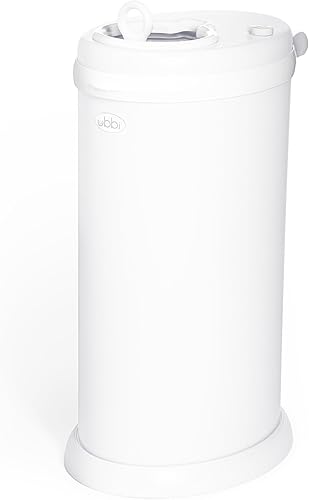
- Material Alloy Steel
- Weight 5.15 Pounds
- Capacity 1.0 Count
- Pack Count 1.0 Count
The Ubbi diaper pail leads the diapering essentials with an alloy-steel body, a 4.6-star rating across 9,912 reviews, and around 9,000 bought in the last month, all at $66.49. The steel construction resists odor absorption better than plastic over time, and the sliding lid design works with standard trash bags rather than proprietary refills, which keeps the running cost low. For a nursery where odor control matters, especially a small room near where you sleep, this is the standout pick.
Best for: Parents who want the best long-term odor control with no proprietary refill costs
Pros
- Alloy-steel body resists odor absorption better than plastic over time
- 4.6-star rating across 9,912 reviews
- Around 9,000 bought last month, the highest demand among essentials here
- Sliding lid works with standard trash bags, no proprietary refills
- Steel build is durable enough to reuse across multiple children
Cons
- $66.49 is a higher upfront cost than basic plastic pails
- Heavier steel body is less portable between rooms
Bottom line: A steel body, no refill cartridges, and a 4.6-star rating make the Ubbi the standout diaper pail for low-running-cost odor control.
Check price on Amazon Read the full review →
- Material Plastic
- Weight 8.36 Pounds
- Capacity 1.0 Count
- Pack Count 1.0 Count
This refill-cartridge diaper pail seals each diaper individually for tight odor control, with a 4.6-star rating across 43,456 reviews and around 6,000 bought in the last month at $68.48. The deep review base, by far the largest of any essential on this list, reflects how widely used this style of pail is. The trade-off is that it relies on proprietary refills that add an ongoing cost, but for parents who prioritize the tightest possible odor seal, that is often a worthwhile expense.
Best for: Parents who want the tightest individual-diaper odor seal and do not mind buying refills
Pros
- 43,456 reviews is the deepest review base among the essentials here
- Individual-seal design provides very tight odor control
- 4.6-star rating across that large sample
- Around 6,000 bought last month confirms steady demand
- Plastic body is lighter and easier to move than a steel pail
Cons
- Relies on proprietary refill cartridges that add an ongoing cost
- $68.48 plus refills makes it the higher-running-cost option
Bottom line: With the deepest review base of any pail here and a tight individual-seal design, this is the pick for parents who prioritize odor control over running cost.
Check price on Amazon Read the full review →
- Material Plastic
- Weight 11.31 Pounds
- Capacity 1.0 Count
- Pack Count 1.0 Count
This Munchkin diaper pail offers a plastic body with a 4.6-star rating across 6,867 reviews and around 3,000 bought in the last month at $69.97. It is a lighter, easy-to-move alternative to a steel pail, with a sealing mechanism designed to trap odor between changes. For parents who want a dedicated pail that is simple to relocate between rooms and carries a solid rating, it is a dependable mid-tier choice in the essentials group.
Best for: Parents who want a lightweight, easy-to-move pail from a trusted baby-gear brand
Pros
- 4.6-star rating across 6,867 reviews
- Lightweight plastic body is easy to move between rooms
- Around 3,000 bought last month confirms steady demand
- Sealing design built to trap odor between changes
- Trusted brand with a long track record in baby gear
Cons
- $69.97 is on the higher side for a plastic pail
- Plastic absorbs odor more over time than a steel body
Bottom line: A 4.6-star rating and a light, movable plastic body make this Munchkin pail a dependable choice for parents who value portability.
Check price on Amazon Read the full review →
- Material Silicone
- Weight 2.1 pounds
This Hiccapop accessory rounds out the diapering essentials with a 4.5-star rating across 23,602 reviews and around 2,000 bought in the last month at $28.47. With a silicone build and a deep review base, it is a popular nursery add-on for keeping wipes at a comfortable temperature during changes, which can make middle-of-the-night diaper changes easier on a baby. It is the most affordable essential on this list and a practical finishing touch for a fully stocked changing station.
Best for: Parents finishing a changing station who want an affordable, well-reviewed nursery add-on
Pros
- 4.5-star rating across 23,602 reviews, a deep confidence signal
- Most affordable essential on this list at $28.47
- Silicone build noted in the product materials
- Around 2,000 bought last month confirms steady demand
- Useful add-on for easier nighttime changes
Cons
- An accessory rather than a core diapering necessity
- 4.5-star rating is the lowest among the essentials here, though still strong
Bottom line: At $28.47 with a 4.5-star rating across 23,602 reviews, this Hiccapop accessory is an affordable, practical finishing touch for a fully stocked changing station.
Check price on Amazon Read the full review →Buying guide
Match the Size to Your Baby, Not the Age on the Box
Diaper sizes are based on weight, not age, and the weight ranges overlap on purpose. A three-month-old at the heavier end of size 1 will leak less in a size 2, and the printed age on the package is only a rough guide. The clearest signs you have sized up too late are red marks around the thighs and waist, frequent blowouts up the back, or a diaper that looks tight when fastened. The clearest sign you have sized up too early is gapping at the legs that lets liquid escape. Because babies grow fastest in the first year, many parents move through sizes N, 1, 2, and 3 within the first eight to ten months. Buying one jumbo pack of the next size up before you need it, rather than a giant box of the current size, avoids being stuck with a case of diapers your baby has already outgrown. Our diaper size chart guide covers the weight ranges in detail.
Cost Per Diaper Beats the Sticker Price
The price on the front of the package tells you very little until you divide it by the diaper count. A $9.97 jumbo pack and a $59.77 one-month box can land at a similar per-diaper cost once you do the math, and sometimes the smaller pack is actually cheaper per change. In this roundup, the Pampers box at B010OVZO64 holds 132 diapers at $59.77, which is about 45 cents each, while the Huggies pack at B0DFRHY91R holds 92 diapers at $24.99, or roughly 27 cents each. The largest boxes usually win on per-diaper cost, but only if your baby stays in that size long enough to use them all. For a newborn moving through sizes quickly, the smaller jumbo pack often wins in practice because nothing goes to waste. Run the per-diaper number before you commit to a big-box subscription.
Absorbency, Materials, and Sensitive Skin
Most disposable diapers use an absorbent core of wood pulp and super-absorbent polymer to lock liquid away from the skin. Several products in this list note a pulp core in their materials, and one Pampers option (B082QBSJ6L) lists an elemental chlorine-free process, which some parents prefer for sensitive skin. If your baby develops redness or a persistent rash, the most common fixes are changing more often, sizing up so the diaper is not held tight against the skin, or switching to a brand that uses a different liner. There is no single diaper that is gentlest for every baby, because skin reactions are individual. The practical approach is to buy a small pack of a new brand before committing to a big box, watch your baby's skin for a few days, and only then stock up. Brand loyalty in diapers is usually built one rash-free week at a time.
Daytime Diapers vs Overnight Diapers
Standard daytime diapers are designed to be changed every two to three hours, while overnight diapers are built with extra absorbent capacity to hold up through ten to twelve hours of sleep. If your baby is waking with leaks or a soaked-through onesie in the morning, the fix is usually an overnight diaper or sizing up one size for nighttime only, which gives the core more room to absorb. Many parents run two products at once: a value daytime diaper for frequent changes and a dedicated overnight diaper for sleep. For older toddlers who have outgrown standard sizes but still need nighttime protection, training-pant and youth-pant style products such as the Goodnites option in our catalog are built specifically for that stage. Matching the diaper to the time of day, rather than using one product around the clock, is the single easiest way to cut down on overnight leaks.
Why a Diaper Pail Earns Its Counter Space
A diaper pail is the one diapering accessory that pays for itself in a smaller nursery or apartment, because it traps odor that an open trash can simply does not. The two main approaches are steel pails, like the Ubbi (B00821FLT4) with its alloy-steel body and sliding lid, and plastic pails with a twist-and-seal or clamp mechanism, like the Munchkin (B01BDQDIGM) and Diaper Genie style pails (B0713M8Z5L). Steel pails resist odor absorption better over time and many accept standard trash bags, which lowers the running cost. Plastic refill-cartridge pails seal each diaper individually and tend to control odor very tightly, but the refills are an ongoing expense. The deciding factors are usually whether you mind buying proprietary refills and how close the pail will sit to where you sleep. For a nursery that shares a wall with the parents' room, a tightly sealing pail is worth the counter space.
How Many Diapers to Stock by Size
Newborns go through eight to twelve diapers a day, which drops to roughly six to eight by the time a baby reaches the toddler stage. That works out to around 300 diapers a month early on, so a single 120-count or 132-count box covers a bit over a week for a newborn. The common mistake is buying a giant case of newborn or size 1 diapers before the baby arrives, only to find the baby grows out of that size in a few weeks. A safer stocking strategy is one box of newborn and one box of size 1 before birth, then sizing the next purchase to how the baby is actually growing. Subscription deliveries help with the highest-volume sizes once you know your baby holds steady in a size for a while. Until then, smaller jumbo packs keep you flexible without filling a closet with the wrong size.
Common mistakes to avoid
- Buying a giant case of newborn or size 1 diapers before the baby arrives, then watching the baby outgrow that size in a few weeks.
- Comparing the price on the front of the package instead of dividing by the diaper count to get the real cost per change.
- Ignoring red marks at the thighs and waist or frequent up-the-back blowouts, both of which usually mean it is time to size up.
- Using one daytime diaper around the clock and then being surprised by morning leaks, when an overnight diaper or a nighttime size-up solves it.
- Committing to a big box of an unfamiliar brand before testing a small pack on your baby's skin for a few days.
- Skipping a diaper pail in a small nursery and relying on an open trash can, which lets diaper odor build up where you sleep.
Frequently asked questions
How do I know when to move my baby up a diaper size?
Diaper sizes are based on weight, and the ranges overlap, so the printed age is only a rough guide. The clearest signs it is time to size up are red marks around the thighs or waist after you remove the diaper, frequent blowouts that escape up the back, or a diaper that looks visibly tight when fastened. Gaps at the legs that let liquid leak out can also mean the current size no longer seals well. If your baby is between sizes, sizing up usually leaks less than sizing down, especially overnight. Because babies grow quickly in the first year, it is common to move through several sizes in the first eight to ten months, so buy smaller packs as you approach a likely size change rather than a giant box you may not finish.
Are store-brand and value diapers as good as premium brands?
For many babies, yes. The Amazon-brand diaper in our database (B07SXBX1DM) holds a 4.2-star rating across more than 60,000 reviews with strong monthly demand, which shows a large number of parents are satisfied with a value option. The honest answer is that fit and skin compatibility are individual: a premium brand that runs slightly narrow may leak on one baby while a value brand fits another perfectly. The practical approach is to try a small pack of a value brand, watch your baby's skin and check for leaks over a few days, and switch back if you see problems. Cost per diaper matters most for the highest-volume early months, so finding a value diaper your baby tolerates can meaningfully lower your monthly spend.
How many diapers will I actually go through in a month?
Newborns typically use eight to twelve diapers a day, which adds up to roughly 250 to 350 a month. That number drops as the baby gets older, settling closer to six to eight a day, or around 180 to 240 a month, by the toddler stage. A single 120-count or 132-count box, like several Pampers and Huggies options on this list, covers a little over a week for a newborn and longer for a toddler. Because newborns grow out of the smallest sizes fast, it is smarter to start with one box each of newborn and size 1 rather than stocking a giant case of one size. Once your baby holds steady in a size, larger boxes and subscriptions lower the cost per diaper.
Do I really need a diaper pail, or will a regular trash can do?
A regular trash can works, but it lets diaper odor build up, which matters most in a small nursery or an apartment where the nursery is near where you sleep. A dedicated diaper pail traps that odor far more effectively. Steel pails like the Ubbi (B00821FLT4) accept standard trash bags and resist odor absorption over time, which keeps the running cost low. Plastic refill-cartridge pails, including the Munchkin (B01BDQDIGM) and Diaper Genie style models, seal each diaper individually for very tight odor control but rely on proprietary refills that add an ongoing cost. If your nursery is small or shares a wall with your bedroom, a pail is one of the few accessories that genuinely earns its space.
What is the difference between regular diapers and overnight diapers?
Overnight diapers are built with a larger absorbent core so they can hold ten to twelve hours of liquid without leaking, while standard daytime diapers are designed to be changed every two to three hours. If your baby wakes with a soaked onesie or leaks overnight, switching to an overnight diaper or sizing up one size for sleep only usually fixes it, because the larger core has more room to absorb. Many parents run both: a value daytime diaper for frequent daytime changes and a dedicated overnight diaper for sleep. For older toddlers who still need nighttime protection, youth and training-pant style products such as the Goodnites option in our catalog are made for that specific stage.
How should I store and stock diapers as my baby grows?
Keep diapers in a cool, dry place out of direct sunlight, and avoid opening the inner packaging until you need it so the diapers stay clean. For stocking, the main rule is to avoid buying ahead in the smallest sizes, since newborns and young infants change sizes quickly. A safe starting point is one box each of newborn and size 1 before birth, then buying the next size based on how your baby is actually growing rather than the age on the box. Once your baby settles into a size for a longer stretch, larger boxes and subscription deliveries make sense and lower the per-diaper cost. Until then, smaller jumbo packs keep you flexible and prevent ending up with a case of diapers your baby has already outgrown.
Final recommendation
The best diaper is the one that fits your baby right now, keeps skin rash-free, and costs the least per change once you do the math on pack count. For most families, the Pampers value pack at B0795WF49L is the clearest starting point given its leading monthly demand, 4.8-star rating, and low entry price, while the Pampers big box at B010OVZO64 offers the deepest review base and strong per-diaper value for parents who have settled into a size. Pair your diapers with a sealing diaper pail like the Ubbi (B00821FLT4) to keep the nursery fresh, and lean on smaller packs while your baby is moving through sizes quickly. Check the weight range before you buy, compare cost per diaper rather than sticker price, and size up at the first sign of red marks or blowouts.