Dr
Dr. Brown's Natural Flow Anti-Colic Options+ Narrow Baby Bottle, 8
$24.9910,000+ bought last month
View on Amazon
When a baby feeds, they can swallow air along with the milk, especially if the nipple collapses, the flow is uneven or the baby gulps. That swallowed air is a common source of gas, hiccups, burping struggles and spit-up. Anti-colic bottles are built to reduce how much air the baby takes in, with the goal of fewer air-related symptoms after a feed. It is worth being precise about the name: the word colic describes prolonged, hard-to-soothe crying in an otherwise healthy baby, and its causes are not fully understood. An anti-colic bottle does not claim to treat that. What it targets is the air-intake part of feeding, which is one factor that can contribute to discomfort. For a baby who is gassy, spits up often or seems uncomfortable after eating, reducing air intake is a reasonable thing to try.
The most well-known anti-colic approach is the internal vent tube, used by Dr. Brown's. A thin tube runs through the inside of the bottle and channels air to the back, past the milk, so the baby draws milk without pulling in air bubbles at the nipple. Dr. Brown's bottles are among the most reviewed feeding products we track, with a four-pack (B01845QH7M) rated 4.8 stars across 52,000 reviews at $24.99 and a 4 ounce newborn four-pack (B0F54RF5BZ) rated 4.7 stars across 17,200 reviews at $29.98. The strength of this design is thorough venting. The trade-off is cleanup: the vent tube is an extra part to wash and assemble for every bottle, which adds up across a day of feeds. Many parents find the extra washing worth it for a gassy baby, and some drop the vent insert once their baby outgrows the early gassy stage.
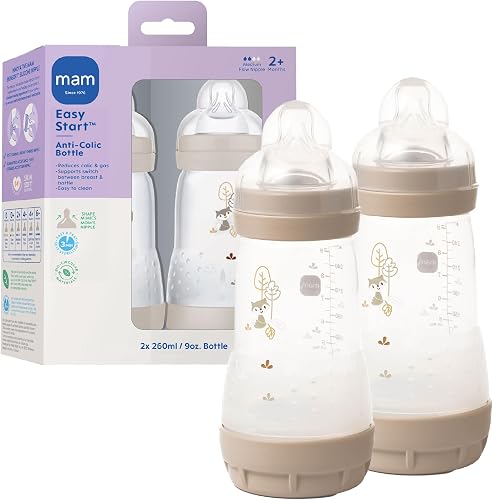
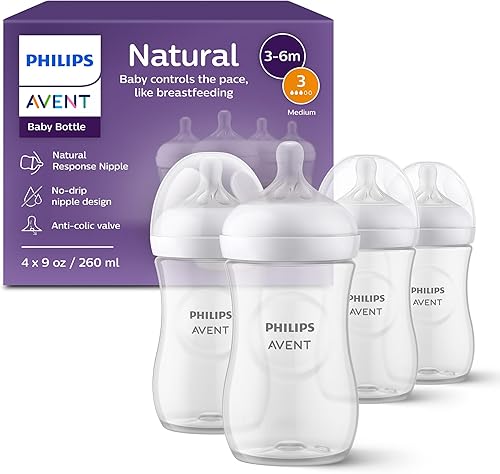
The second approach reduces air without an internal tube by venting through the base of the bottle or through a valve in the nipple. MAM (B09H7NKY6N, 4.8 stars across 20,472 reviews, $12.96) uses a vented base, and Philips Avent (B0964CHD65, 4.8 stars across 25,000 reviews, $29.95) uses a valve in the nipple that flexes to let air in as the baby drinks, so the nipple does not collapse. Tommee Tippee (B00K5KVC52, 4.7 stars across 26,100 reviews, $23.99) and Boon (B07BL83415, 4.7 stars across 17,854 reviews, $18.19) use similar vented designs. The appeal of this style is fewer parts to wash, since the venting is built into the base or nipple rather than added as a separate tube. The trade-off is that valve and base systems may vent slightly less aggressively than a full internal tube. For many babies the difference is small, and the simpler cleanup is a real day-to-day benefit.
Both styles aim at the same goal, so the choice usually comes down to how gassy your baby is and how much cleanup you are willing to take on. If your baby is very gassy or spits up a lot, the thorough venting of an internal-tube system like Dr. Brown's (B01845QH7M) is a strong starting point, with the understanding that you will wash an extra part per bottle. If your baby has milder symptoms or you want to minimize parts, a vented-base or valve design like MAM (B09H7NKY6N) or Philips Avent (B0964CHD65) gets you most of the benefit with simpler cleanup. There is no universally correct answer, and some parents keep both on hand. A practical approach is to start with whichever style matches your tolerance for washing, and only switch if your baby's symptoms do not improve after several feeds.
It is important to set realistic expectations. Anti-colic bottles reduce air intake, but not every fussy or gassy baby is reacting primarily to swallowed air. Spit-up and reflux can have other causes, fussiness can be unrelated to feeding, and true colic, by definition, has no single known cause or cure. An anti-colic bottle is a low-risk thing to try, and many parents do see fewer air-related symptoms, but it is not a treatment for a medical condition. If your baby has frequent forceful spit-up, seems to be in pain during or after feeds, is not gaining weight as expected, or cries inconsolably for long stretches, those are reasons to talk with your pediatrician rather than cycling through more bottles. Use an anti-colic bottle as one tool, not as a substitute for professional guidance when something seems off.
A few simple habits help any anti-colic bottle work as intended. Hold the bottle at an angle so the nipple stays full of milk rather than half full of air, which keeps the baby from sucking in air at the tip. Use the right nipple flow for your baby's stage, since a flow that is too fast can cause gulping and a flow that is too slow can make the baby suck harder and swallow more air. Assemble vented parts exactly as the instructions describe, because a vent tube or valve that is misaligned will not vent properly. Pause for a burp partway through larger feeds. And give a new bottle several feeds before deciding it is not working, since babies need a little time to adjust to a new nipple. These small steps often matter as much as the bottle's design itself.
Anti-colic bottles are designed to reduce the air a baby swallows during a feed, and many parents do report less gas, hiccups and spit-up after switching. They work by either channeling air away from the milk with an internal vent tube, as Dr. Brown's (B01845QH7M) does, or by venting through the base or a nipple valve, as MAM (B09H7NKY6N) and Philips Avent (B0964CHD65) do. How much difference you see depends on whether swallowed air was a major contributor to your baby's discomfort in the first place. They are a low-risk, sensible thing to try for a gassy baby, but they are not a guaranteed fix for every fussy feed.
Internal-vent bottles, like Dr. Brown's (B01845QH7M), use a tube inside the bottle to channel air past the milk, which vents thoroughly but adds an extra part to wash for every bottle. Vented-base and nipple-valve bottles, like MAM (B09H7NKY6N) and Philips Avent (B0964CHD65), let air escape through the base or a flexing nipple valve, which means fewer parts to clean but possibly slightly less aggressive venting. For a very gassy baby, the thorough internal-tube design is a strong choice. For milder symptoms or simpler cleanup, a vented-base design gets you most of the benefit. Many parents keep both styles on hand.
By reducing how much air a baby swallows, an anti-colic bottle can help with the spit-up that comes from trapped air for some babies. However, spit-up and reflux can have causes that have nothing to do with air intake, so a bottle change does not always solve them. Holding the bottle at an angle so the nipple stays full, using the right nipple flow and burping partway through a feed all help as well. If your baby has frequent forceful spit-up, seems to be in pain, or is not gaining weight as expected, talk with your pediatrician rather than relying on a bottle change alone.
Internal-vent bottles like Dr. Brown's (B01845QH7M) have more parts because of the vent tube, so they take a little longer to wash and assemble than a standard bottle, which matters when you are cleaning bottles several times a day. Vented-base and valve designs like MAM (B09H7NKY6N) and Boon (B07BL83415) have fewer extra parts and are simpler to clean. If cleanup time is a major concern, a vented-base bottle is the easier choice. If thorough venting matters more than washing time, the extra parts of an internal-tube system are usually a worthwhile trade-off for a gassy baby.
An anti-colic bottle is a reasonable first step for a gassy or spit-up-prone baby, but it is not a treatment for a medical problem. If your baby has frequent forceful spit-up, appears to be in pain during or after feeds, is not gaining weight as expected, refuses to feed, or cries inconsolably for long stretches, those are reasons to contact your pediatrician rather than trying more bottles. We research and curate feeding gear from product data and verified parent reviews, and we do not provide medical advice. Your pediatrician is the right resource for any concern about your baby's feeding or health.