mommore
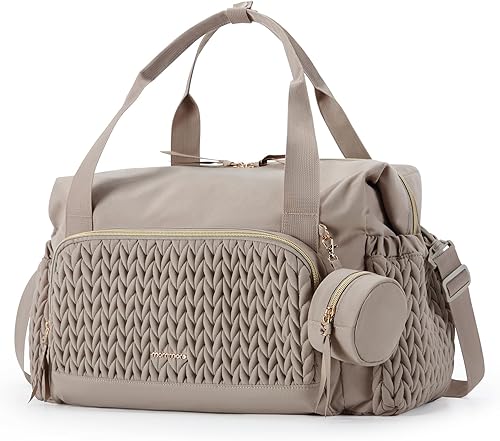
mommore Diaper Bag Tote, Large Capacity Travel Diaper bags, Hospital
$37.58700+ bought last month
View on Amazon
Some items belong in the bag for every outing regardless of length. Pack diapers at a rate of roughly one per hour you will be out, plus two extra for delays, and a full travel pack of wipes. Include a changing pad so you have a clean surface anywhere, since our product data does not confirm a changing pad ships with every bag, so check your bag's listing or add a thin foldable pad separately. Add at least one complete change of clothes, because blowouts and spills happen at the least convenient times. Round out the core with a small pack of disposable bags for dirty diapers and a travel pack of hand sanitizer. These essentials fit easily in a bag with a handful of pockets, like the five-pocket top pick (B07JWCDD7H), and form the baseline you build everything else on.
What you pack for feeding depends on your baby's age and how you feed. For bottle-fed babies, pack enough prepared bottles or pre-measured formula and water for the trip plus one extra feeding, and keep bottles upright and separate from the rest of the bag, which is where a high pocket count earns its keep. Bags with many compartments, like the fourteen-pocket mommore (B0D1K9FBFY) or the sixteen-pocket bag B0CY2C3YXZ, give bottles their own dedicated slots. For older babies on solids, add a couple of spill-proof snack containers, a bib, and a spoon. A small cloth or extra burp cloth handles the inevitable mess. Keep feeding items in their own pocket so they never mingle with diapers or wipes, which keeps everything more sanitary.
A small health and cleanup kit prevents a minor problem from cutting an outing short. Include a travel-size diaper rash cream, infant-appropriate pain reliever if your pediatrician has approved one, a few bandages, a small thermometer if you travel far from home, and any prescribed medication your baby needs on schedule. Add extra disposable bags for soiled clothes, a small pack of stain-treatment wipes, and a spare pacifier in a clean case. Tuck these into a dedicated zippered pocket so they stay sealed and separate, which is where bags with secure zipper closures, the most common closure type in this category, are reassuring. Keeping this kit permanently stocked in the bag means you are never caught without it.
Comfort items keep a fussy baby settled and buy you a few quiet minutes. Pack a favorite pacifier or two, a small soft toy or teether, and a lightweight blanket that doubles as a nursing cover, a sunshade, or a clean surface on the go. For older babies and toddlers, a single quiet toy or a board book can defuse a meltdown in a waiting room or restaurant. Keep these in an easy-access outer pocket so you can reach them one-handed, which is exactly what magnetic and open side pockets, like those on bag B0CY2C3YXZ, are designed for. The goal is to reach the soothing item before the fussing escalates, so put it where you can grab it without unzipping the whole bag.
Tailor the quantities to how long you will be away rather than packing the same load every time. For a quick errand under two hours, two diapers, a small wipe pack, one change of clothes, and a single feeding cover it, which fits a compact bag like the SoHo Grand Central (B08PC6WL9C). For a half-day out, scale up to four or five diapers, a full wipe pack, two changes of clothes, and enough feeding supplies for the duration plus one extra. For a full day or travel, add a second outfit for yourself, extra feeding supplies, a fuller health kit, and a bag with the pocket count to keep it all organized, like the thirteen-pocket Skip Hop messenger (B07BHFQP73). Matching the load to the trip keeps you from hauling a heavy bag on a short errand or running short on a long day.
A fully stocked bag is only useful if you can find things while holding a baby. Assign each category its own pocket and keep it consistent, diapers and changing pad in one compartment, wipes in a quick-access pocket, feeding supplies separate, and comfort items in an outer pocket you can reach without looking. This is where pocket count and layout matter as much as capacity. Bags built for organization, like the fourteen-pocket mommore (B0D1K9FBFY) or the sixteen-pocket bag B0CY2C3YXZ with its magnetic-and-zipper layout, make this system easy. A two-pocket bag works for a minimalist who carries little, but most parents find that more compartments mean less digging. Restock each pocket as you use it so the bag stays organized and ready for the next trip.
A common rule of thumb is roughly one diaper per hour you expect to be out, plus two extra to cover delays. For a two-hour errand, that means about four diapers; for a half-day, five or six. Always round up, since the cost of carrying an extra diaper is nothing compared with being caught without one. Keep a full travel pack of wipes alongside them, and restock both the moment you get home so the bag is ready for the next trip.
Some do and some do not, and our product data does not confirm an included changing pad for every listing, so check the specific product page before assuming one is included. Many diaper bags ship with a fold-out changing pad, but a portable pad is inexpensive to add separately. A thin foldable pad slips into any of the larger compartments and gives you a clean surface anywhere, so a bag without one is not a dealbreaker.
A complete change of clothes is the item parents most often wish they had packed. Blowouts and spills happen at the least convenient times, and a spare outfit turns what could be an early trip home into a quick change. Pack at least one full set for a short outing and two for a full day. After that, a full pack of wipes and a changing pad round out the items you will reach for most.
Assign each category its own pocket and keep the arrangement consistent: diapers and changing pad together, wipes in a quick-access pocket, feeding supplies separate, and comfort items in an outer pocket you can reach one-handed. This is where pocket count matters. Bags built for organization, like the fourteen-pocket mommore (B0D1K9FBFY) or the sixteen-pocket bag B0CY2C3YXZ, make the system easy. Restock each pocket as you use it so the bag stays ready for the next trip.
It depends on how long your typical outings are and how many children you carry for. For short errands, a compact bag like the SoHo Grand Central (B08PC6WL9C) holds the essentials without bulk. For full days, travel, or more than one child, a larger organizer with a high pocket count, such as the thirteen-pocket Skip Hop messenger (B07BHFQP73) or the fourteen-pocket mommore (B0D1K9FBFY), keeps everything sorted. Match the bag to your longest regular outing rather than your shortest, since a slightly larger bag carries a light load fine but a small bag cannot stretch.
Yes. Reach us at hello@babycareshop.com and we will do our best to help. We share product details such as rating, review count, material, pocket count, and price based on current listing data. For specifics not shown in our data, such as whether a particular bag includes a changing pad or insulated bottle pocket, we recommend checking the product page directly. For health-related packing questions, your pediatrician is the best source on what medications or items are appropriate for your baby.

