Jogging Stroller Guide: How to Choose the Right One
Recommended picks

What Makes a Jogging Stroller Different
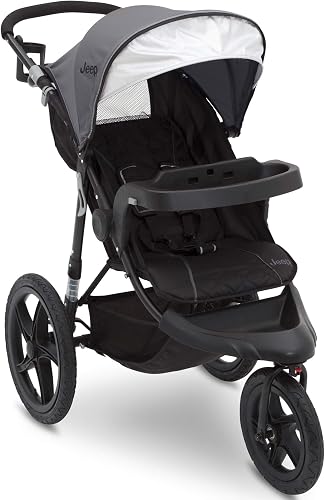
A jogging stroller is distinguished by its wheel layout and frame. Instead of the four smaller wheels on a typical standard stroller, a jogger uses three larger wheels, usually one in front and two in back, which roll more smoothly over cracks, gravel, and trails and stay stable at running pace. The frame is built to absorb bounce and keep a straight line when you push at speed. The Jeep 11288-2094 in our catalog is the jogging example, built on a polyester and mesh frame, weighing 29 pounds, and rated to 50 pounds. That heavier, larger build is the trade-off for the stability that running requires, so a jogging stroller takes more trunk space and is a two-handed lift compared to a compact umbrella stroller.
The Front Wheel: Lock vs Swivel
The front wheel is the most important mechanical feature on a jogging stroller. A swiveling front wheel turns easily and is great for maneuvering through stores, doorways, and crowded sidewalks at walking pace. A locked, fixed front wheel keeps the stroller tracking straight, which is exactly what you need when running, because a swiveling wheel can wobble or veer at speed. The best jogging strollers offer both: a front wheel that swivels for everyday walking and locks straight for running. When evaluating a jogger, confirm on the listing whether the front wheel locks, since that single feature determines whether the stroller is genuinely suited to running or only to a smoother walk. The Jeep 11288-2094 is listed as a jogging stroller, so check the product page for its front-wheel details before buying.
Wheel Type and Your Surfaces
Jogging strollers use larger wheels than standard strollers, and the wheel construction matters for the surfaces you cover. Air-filled rubber tires cushion the ride best on rough ground like trails, gravel, and broken sidewalks, but can require occasional inflation and are vulnerable to punctures. Solid or foam-filled tires never go flat and need no maintenance, but ride a little firmer. Match the wheel type to where you will actually run. If you stick to paved paths and smooth sidewalks, firmer maintenance-free wheels are fine. If you run trails or rough terrain, the cushioning of air-filled tires is worth the upkeep. Check the wheel material on the listing, and remember that larger wheels generally handle uneven ground better regardless of fill type.
Weight Capacity and Years of Use
Like any stroller, a jogger's weight capacity decides how long you will use it. The Jeep 11288-2094 is rated to 50 pounds, which typically carries a child into the four-to-five-year range, giving you years of running and walking with the same stroller. Because joggers are an investment in both money and trunk space, a higher capacity helps justify the purchase by extending its useful life. If you plan to keep running with your child as they grow, a 50-pound or higher capacity is worth prioritizing. Pair that with the child's growing comfort in the seat, and a well-chosen jogging stroller can remain part of your routine for several years rather than being outgrown quickly like some lower-capacity umbrella models.
Car Seat Compatibility for the Early Months
Newborns and very young infants cannot sit upright or absorb the bounce of running, so you cannot jog with a young baby in the regular stroller seat. A car seat compatible jogging stroller bridges this gap by letting you click an infant car seat into the frame for walking during the early months, then transition to the regular seat and begin running once your child has the neck and core strength the manufacturer specifies. The Jeep 11288-2094 is listed as car seat compatible, which makes it usable as a walking travel system before your child is ready to run. If you want one stroller that grows with you from the newborn stage through your running years, car seat compatibility is a valuable feature to look for.
Is a Jogging Stroller Right for You?
A jogging stroller earns its place if you genuinely run, walk long distances, or cover uneven ground like trails and gravel regularly. The larger wheels and stable frame make those activities comfortable and safe in a way a standard stroller cannot match. If you mostly do short errands on smooth pavement, a jogger's extra size and weight may be more than you need, and a lightweight umbrella stroller or a standard model would suit you better. Be honest about your routine. The Jeep 11288-2094 at $149.99 is a sensible entry point if you want a capable jogger that also doubles as a walking travel system, but a jogging stroller is a specialized tool, and it is most worth the size and cost for parents who will actually run with it.
Common mistakes to avoid
- Running with a swiveling front wheel unlocked, which can cause the stroller to wobble or veer at speed instead of tracking straight.
- Jogging with a baby who is too young, before they have the neck and core strength the manufacturer specifies for running.
- Buying a jogging stroller for short errands on smooth pavement, then finding it too large and heavy for the way you actually use it.
- Overlooking the wheel type and getting firm maintenance-free tires for rough trail running, or air-filled tires that you forget to keep inflated.
- Assuming any three-wheel stroller is a true jogger, when only models with a lockable front wheel are genuinely built for running.
- Ignoring the weight capacity and outgrowing an expensive jogger sooner than expected when a higher-capacity model would have lasted longer.
Frequently asked questions
When can I start running with a jogging stroller?
Most jogging stroller manufacturers advise waiting until your baby has developed the neck and core strength to handle the bounce of running, which is generally around the six-to-eight-month mark, though the exact guidance varies by model. Before that point, a car seat compatible jogging stroller like the Jeep 11288-2094 can still be used for walking with an infant car seat clicked in. Always follow the specific age and weight guidance on your stroller's listing and instructions for running, and check with your pediatrician if you are unsure whether your child is ready.
What is the difference between a jogging stroller and a regular stroller?
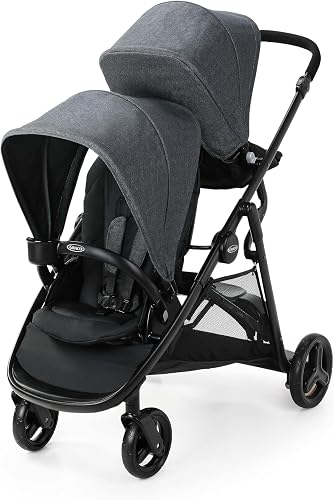
A jogging stroller uses three larger wheels and a stable frame built to stay steady at running pace and roll smoothly over uneven ground, while a regular stroller typically uses four smaller wheels optimized for walking and maneuvering. Joggers usually have a front wheel that locks straight for running, larger air-filled or solid tires, and a heavier, larger frame. The Jeep 11288-2094 in our catalog is a jogging stroller at 29 pounds rated to 50 pounds. A regular standard stroller like the Graco 2140042 is built for everyday walking with a roomier seat and basket, but it is not designed for running.
Do I need the front wheel to lock on a jogging stroller?
Yes, a lockable front wheel is the feature that makes a stroller genuinely suited to running. A swiveling front wheel turns easily for walking and maneuvering but can wobble or veer when you push at running speed. Locking the front wheel straight keeps the stroller tracking in a straight line so it stays stable and predictable as you run. The best joggers let the front wheel swivel for everyday use and lock for running, giving you both. When choosing a jogging stroller, confirm on the listing that the front wheel locks, because without that feature it is really a smoother-rolling walking stroller rather than a true jogger.
Can a jogging stroller also be used as an everyday stroller?
Yes, many jogging strollers double as everyday strollers, especially when the front wheel can unlock to swivel for easy maneuvering at walking pace. The Jeep 11288-2094 is car seat compatible, so it can serve as a walking travel system in the early months and then handle both running and daily outings as your child grows. The main trade-offs for everyday use are the larger size and heavier weight compared to a compact umbrella stroller, which mean it takes more trunk space and is a two-handed lift. If you run regularly and want one stroller to cover both running and errands, a jogger with a swiveling front wheel is a practical all-in-one choice.
Are air-filled tires better than solid tires on a jogging stroller?
It depends on where you run. Air-filled rubber tires give the most cushioned ride and handle rough trails, gravel, and broken sidewalks best, but they can require occasional inflation and are vulnerable to punctures. Solid or foam-filled tires never go flat and need no maintenance, but they ride a little firmer. If you run mostly on smooth paved paths, maintenance-free solid tires are convenient and perfectly adequate. If you run on trails or rough terrain, the extra cushioning of air-filled tires is usually worth the upkeep. Check the wheel material on the stroller's listing and match it to the surfaces you actually run on most often.